CSR approach: the mobile charging station, a concrete lever for businesses welcoming the public
Long seen as a communication exercise or a regulatory constraint, the CSR approach has become a genuine strategic issue for any business concerned about its impact and its long-term performance. Faced with more demanding consumers, employees attentive to the meaning of their work and investors increasingly vigilant on non-financial criteria, corporate social responsibility is no longer optional. Yet these commitments still have to be turned into concrete actions, visible on the ground and measurable in their effects. For organisations that welcome the public, one of the least known but most effective levers lies in a seemingly trivial service: the self-service mobile charging station. This guide explores how this type of equipment fits fully into a structured CSR approach, while clarifying the issues, the examples of actions available and the evaluation methods to put in place.
Understanding the challenges of a CSR approach today
Before identifying concrete levers, it is useful to recall exactly what the notion of corporate social responsibility covers and why it holds a growing place in business strategy.
A definition rooted in sustainable development
The CSR approach refers to a business's voluntary integration of social, environmental and economic concerns into its activity and its relations with its stakeholders. The international standard ISO 26000 is the most widely recognised reference framework. In France, the PACTE law of 2019 and then the European CSRD directive, applicable since 2024, have strengthened non-financial reporting obligations for a growing number of organisations. CSR thus stops being a nice extra and becomes a structuring framework for economic activity.
Three inseparable pillars
A solid CSR approach is built around three complementary axes. The environmental pillar aims to reduce the business's footprint on natural resources, limit emissions and follow a sustainable development logic. The social pillar covers working conditions, diversity, inclusion and the engagement of staff and employees alike. Finally the economic pillar, often forgotten, concerns responsible performance, business ethics and fair relations with all stakeholders. These three dimensions cannot be handled separately: a truly responsible action produces positive impacts on all three at once.
Growing pressure from stakeholders
Studies agree: more than 70 percent of consumers now say they take a brand's responsible commitment into account in their buying choices, and this expectation is even stronger among the under-35s. On the employee side, alignment between personal values and the company's policy has become a major criterion for attractiveness and retention. External stakeholders, regulators, investors and B2B customers, align their own strategies with these expectations, creating a knock-on effect at every level.
How do you set up a CSR approach in your business?
Moving from intention to action takes a structured method. An improvised CSR approach rarely produces measurable results and can even expose the business to accusations of greenwashing.
Making an initial diagnosis and mapping stakeholders
The first step is to assess the current situation. This means analysing internal practices, mapping stakeholders (employees, customers, suppliers, partners, neighbours, local authorities), and identifying the main material issues for the business. This diagnostic phase is the foundation for everything that follows: without it, the CSR strategy risks focusing on low-priority subjects or ones disconnected from real expectations.
Defining measurable objectives and an action plan
A credible CSR approach relies on quantified objectives, aligned with the issues identified and tracked over time. Putting a formalised framework of commitments in place (charter, internal policy, multi-year plan) gives stakeholders clarity and commits the organisation to a path of progress. Each axis must translate into concrete actions, funded, scheduled and assigned to a named owner.
Involving employees and communicating transparently
A CSR strategy cannot remain the preserve of management. It requires collective commitment, which means raising awareness, training and mobilising employees at every level. Communication, internal and external, must remain honest: acknowledging progress made, but also difficulties encountered, paradoxically helps strengthen the credibility of the approach.
Why smartphone batteries have become an issue in public places
Among the concrete actions available to venues open to the public, installing a mobile charging station is often overlooked. Yet it meets a need that has become structural.

The smartphone, an indispensable tool of the visitor journey
Transport ticket, boarding pass, means of payment, loyalty card, wayfinding app, emergency call: the smartphone now concentrates most of the digital services a visitor on the move depends on. This centrality keeps growing with the continued digitalisation of physical supports.
A dead battery creates a break in service and exclusion
When the battery gives out, it is no longer a simple inconvenience. For some groups, it can amount to genuine exclusion: being unable to validate a transport ticket, show a digital ID, contact a loved one or access an activity. Older people, people in precarious situations or distant from digital technology are particularly vulnerable to these breaks, as they rarely have a spare charger or an external power bank. A venue mindful of its social responsibility can no longer ignore this dimension.
Users' growing expectations in public venues
In stations, airports, shopping centres, hospitals, town halls or conference centres, visitors now expect basic services to include an accessible charging solution. The absence of such a service becomes an identified irritant in satisfaction surveys, while its presence is seen as a sign of attention to the consumer and the user.
How mobile charging can support a CSR approach
Installing a self-service mobile charging station is not just a utility service. It is an example of CSR action that activates several levers at once.
Improving digital accessibility and fighting exclusion
On the social front, a station accessible to all helps guarantee continued access to essential digital services, including for vulnerable groups or those distant from digital technology. This access helps reduce inequalities and preserve a fundamental right that has become inseparable from daily life: being able to move around, communicate and carry out one's errands without being blocked by a trivial technical problem.
Encouraging pooling rather than over-equipping
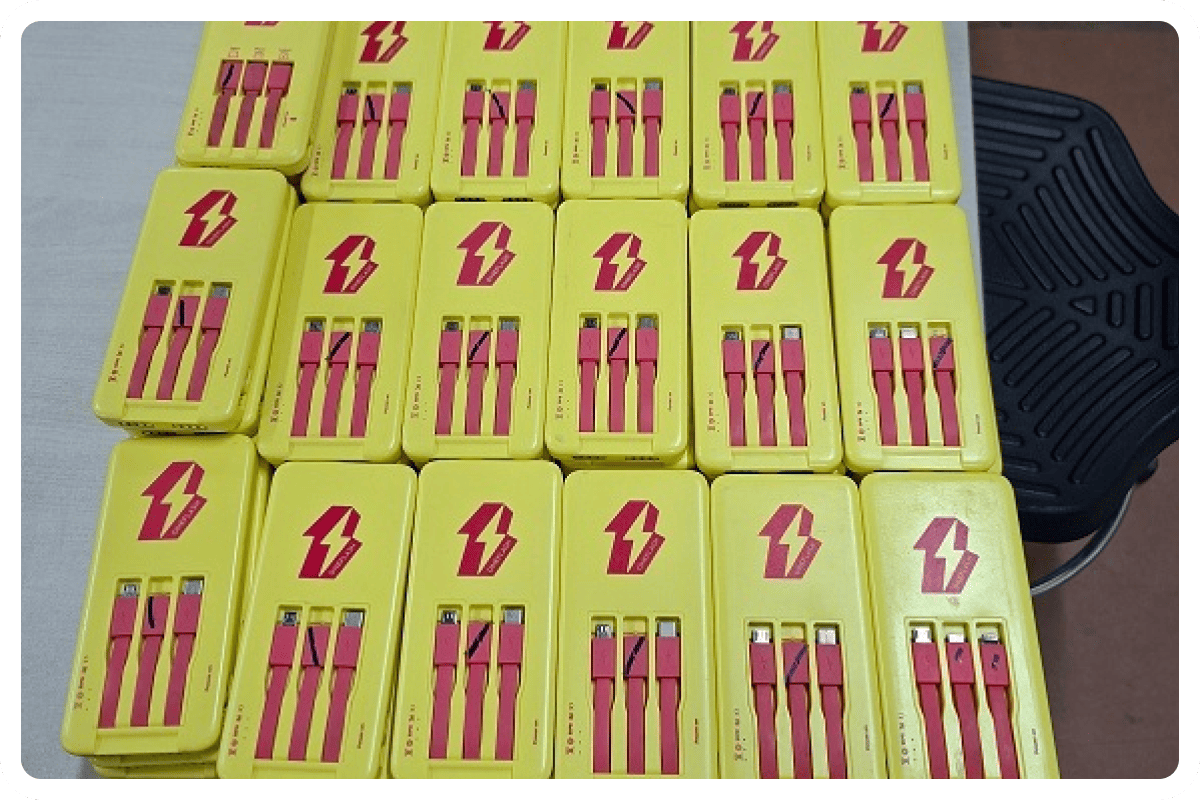
On the environmental front, the self-service station rests on a virtuous principle: rather than encouraging each visitor to buy an individual power bank (often of mediocre quality, quickly replaced and rarely recycled), it pools a shared fleet of durable power banks. This sustainable development logic considerably limits lithium consumption and reduces the production of electronic waste. Some operators, such as OneFlash, go even further by entrusting the refurbishment of their power banks to ESATs, social and solidarity economy organisations that employ adults with intellectual or psychological disabilities. This approach thus combines the three pillars of CSR in a single system.
A service that improves the experience and the image of the venue
On the economic and governance front, installing this kind of service strengthens the image of a venue attentive to its users' real needs. This positive perception feeds satisfaction, loyalty and the attractiveness of the site. The return on investment is measured as much in perceived impact as in tangible commercial indicators.

What other examples of CSR actions can businesses take?
The charging station is obviously just one facet among many. A complete CSR approach mobilises actions across all three pillars.
On the environmental axis, levers include reducing buildings' energy consumption, digital sobriety, responsible waste management, active travel for employees and product eco-design. On the social axis, businesses can act on diversity, gender equality, disability, quality of life at work, continuing training and the inclusion of vulnerable groups. On the governance and economic axis, actions cover business ethics, transparency, the fight against corruption, supply chain responsibility and fair relations with suppliers.
How do you assess the impact of a CSR approach?
A CSR strategy is only worth something if its effects are measured. Evaluation is both an internal management tool and a mark of credibility with stakeholders.
Choosing the right performance indicators
Each commitment axis must be tied to quantifiable indicators: CO2 emissions avoided, percentage of recycled materials, employment rate of people with disabilities, gender equality index, employee satisfaction score, end-of-life product return rate. These indicators let you steer the approach and show progress made from one year to the next.
Drawing on recognised frameworks
Several external frameworks offer a robust evaluation structure. The EcoVadis assessment is now one of the most widely used standards in Europe, with more than 100,000 businesses assessed worldwide. ISO 26000 provides a complete outline, while the GRI (Global Reporting Initiative) framework is particularly suited to large organisations. Finally the B Corp Impact Assessment is an even more demanding alternative, reserved for organisations ready to have their model certified by an independent third party.
Communicating with transparency and honesty
Evaluation is pointless if it stays confidential. Publishing an annual CSR report, sharing key indicators with stakeholders and acknowledging areas for improvement: this transparency strengthens the credibility of the approach and avoids accusations of greenwashing. It also helps keep teams mobilised in the long term by giving meaning to the actions undertaken.

In summary
The CSR approach is not just a communication exercise or a nicely presented annual report. It rests on concrete, measurable actions aligned with the real issues of stakeholders. For venues open to the public, the self-service mobile charging station is a particularly relevant example: it improves digital accessibility, reduces individual over-equipping, fits a sustainable development logic and strengthens the image of a venue attentive to its users. Combined with a set of other actions covering the environmental, social and economic pillars, it helps build a coherent, credible and lasting strategy, for the benefit of the business, its employees and society as a whole.
Discover OneFlash, the European leader in self-service mobile charging!
Découvrez tout nos autres articles :
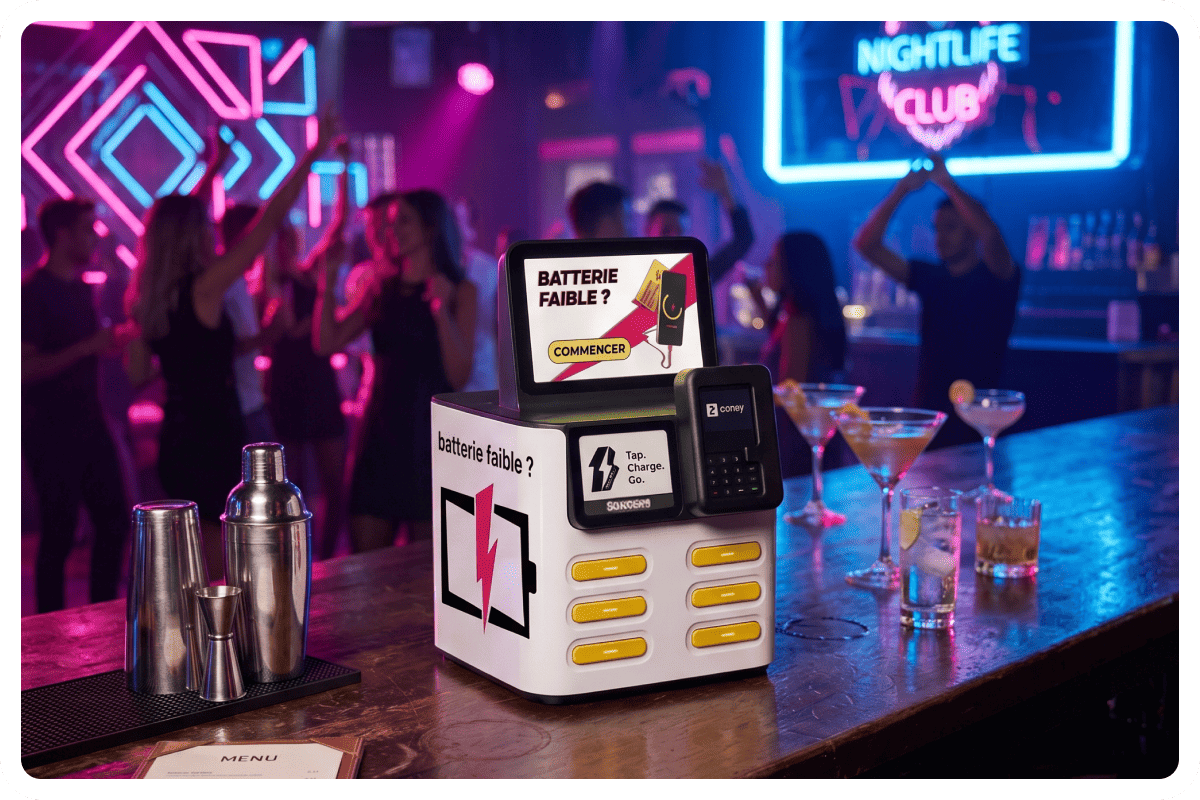
Self-service power banks: phone charging for bars and nightclubs

Standalone power bank station: phone charging at the restaurant

Customer loyalty in restaurants: bring guests back with phone charging

Customer knowledge: how to collect the right data

Marketing activation: turning every interaction into an engagement lever for your brand
.jpeg)
Phone lockers: the limits and the modern alternative
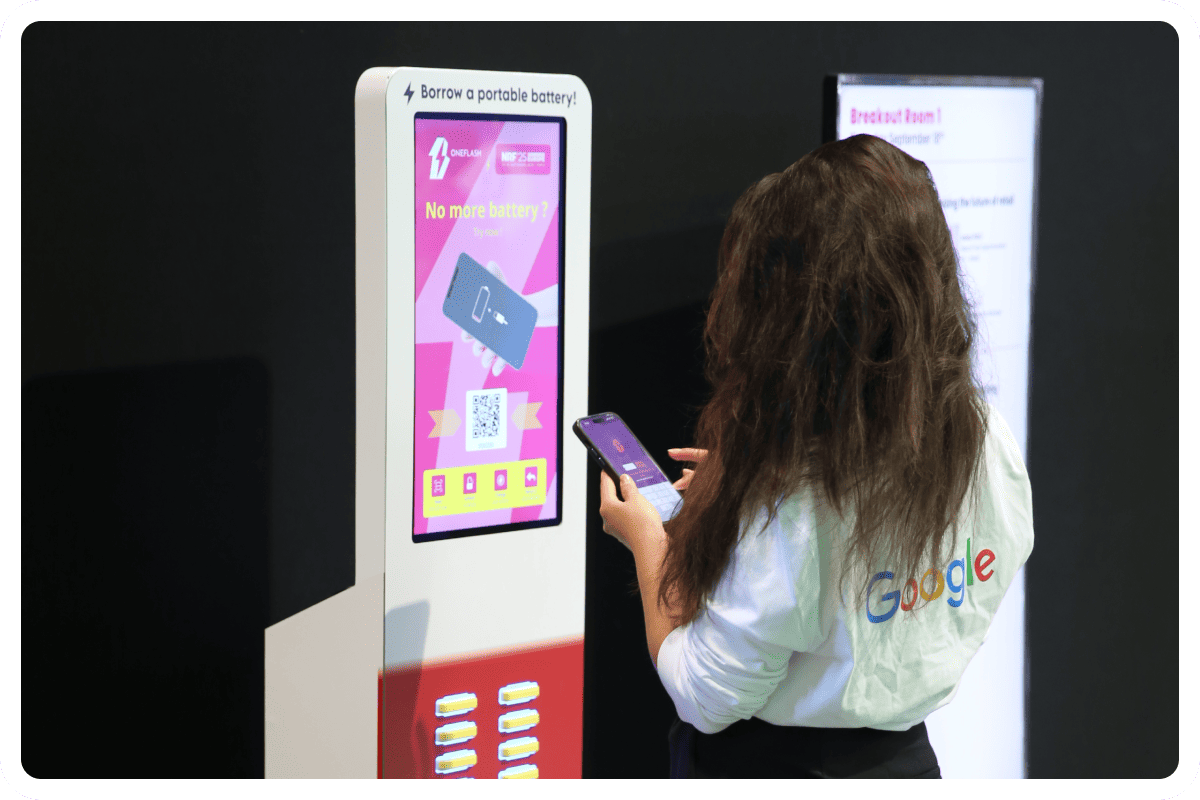
Charging stations in conference centres: equipping an event

Charging stations in theme parks: improving the visitor experience all day long

Grégory Sion (Pierre & Vacances): Share Your Power - Episode 14

Sébastien Manceau (European Camping Group): Share Your Power - Episode 13

Mobile charging: every way to charge your phone easily

Dominique Thillaud (Compagnie des Alpes): Share Your Power - Episode 12
.jpeg)
Charging stations: the complete guide to choosing

Mike Hadjadj (La Retail Tech): Share Your Power - Episode 11
%2520(1).jpeg)
USB fast charging: the complete guide

Antoine de Tavernost (Auditoire): Share Your Power - Episode 10

Charging station rental: the complete guide

Power banks for mobile devices: the complete guide

Phone charging in public places: wall sockets
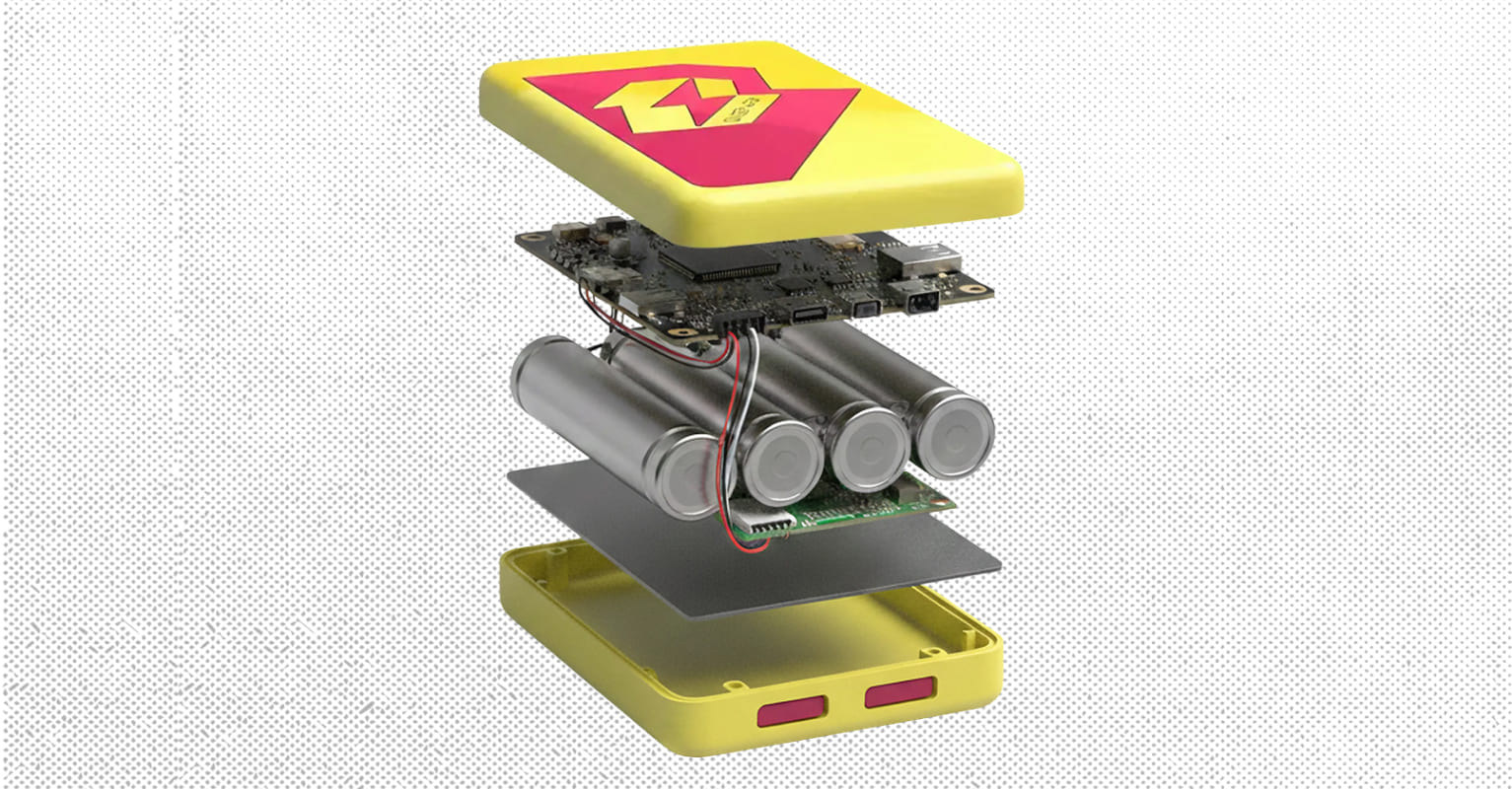
Ask Jamy! How does a power bank work?

In-store customer experience tools: the levers to activate

Are portable power banks dangerous?

The best power bank station services